Mirrors do more than return an image. Across roads, rooms, buildings, and still water, reflective surfaces crop the world, reverse its direction, and draw distant elements into a s
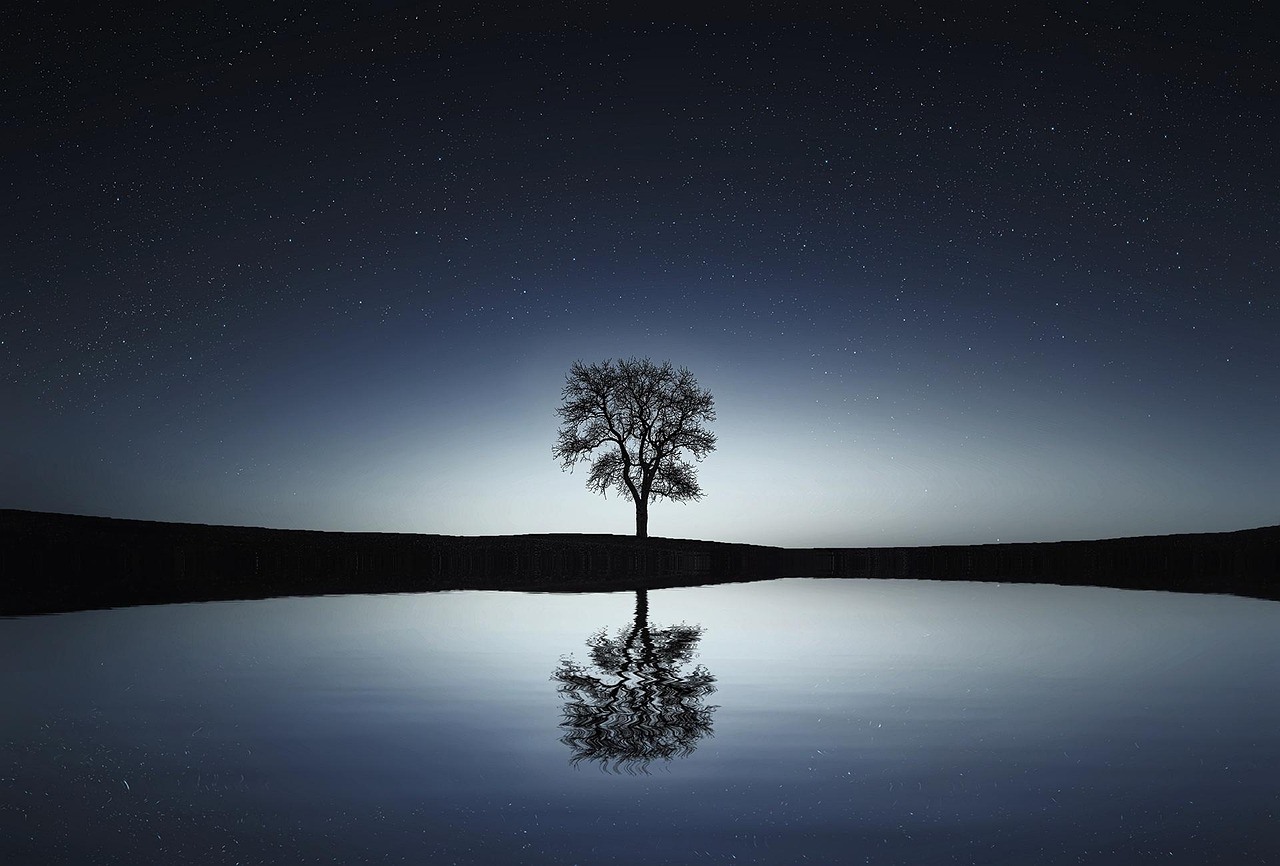
A bare solitary tree stands on a narrow dark shore beneath a starry blue-black sky and reflects in smooth water.
The leafless tree forms a fine branching silhouette against a pale glow near the horizon. Its reflection descends into the water with softer edges, doubling the trunk and branching structure without reproducing every detail. A long, dark strip of land stretches horizontally across the scene, separating the brighter sky from its muted counterpart below. Sparse stars remain visible in the upper darkness, while the center holds the strongest light. The tree sits slightly right of center, giving the open space around it an active role. Reflection completes the vertical form and makes the narrow shoreline feel like a boundary between parallel nocturnal fields.
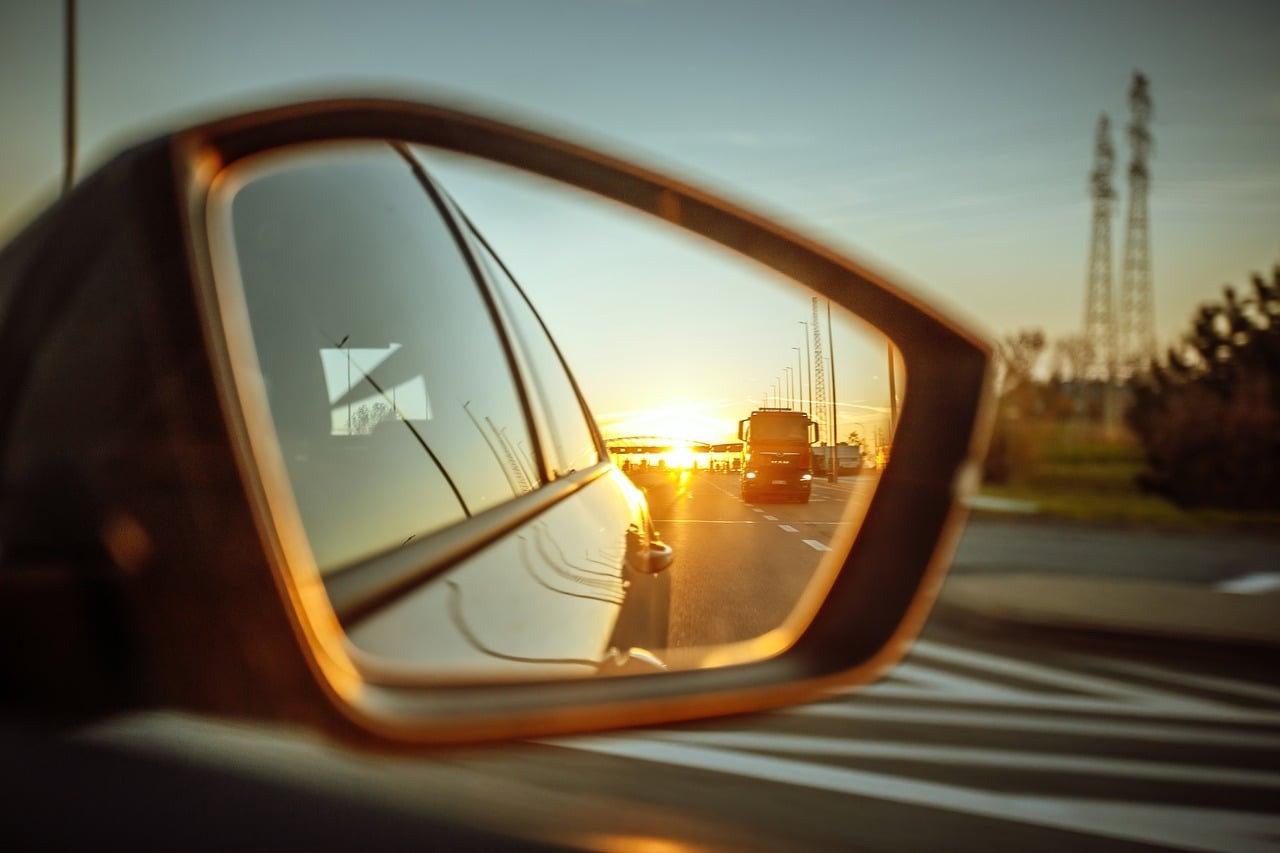
A car side mirror frames sunset traffic, utility lines, and the bright edge of a white vehicle beside a blurred roadway.
The side mirror creates a contained landscape within the moving vehicle. Its rounded frame gathers a low sun, a line of traffic, utility poles, and the pale flank of the car into one compressed view. Warm amber light spreads across the glass while the surrounding road slips into softer streaks. The reflected lane appears close and sharply bounded, yet its distance remains difficult to judge because the mirror reduces depth and scale. A small pale mark on the glass interrupts the sunset like a floating geometric fragment. Here, reflection becomes a practical window and a visual threshold, holding the road behind inside the journey ahead.
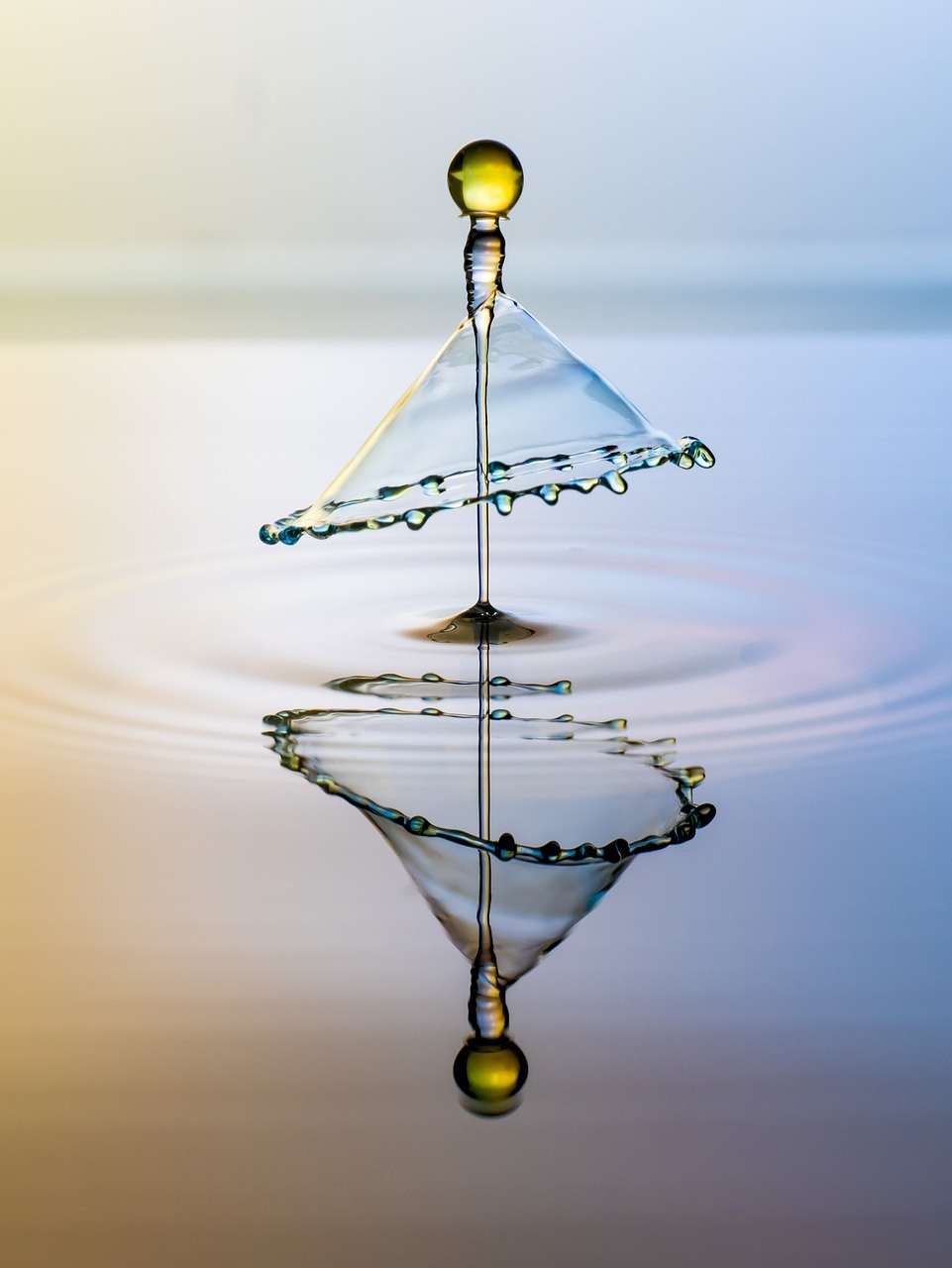
A suspended droplet strikes calm water, forming a delicate umbrella-like crown and a vertically aligned reflection below.
A single impact organizes the image around a slender vertical line. At the center, water spreads into a translucent, umbrella-like rim edged with tiny beads, while a rounded droplet hangs above it. The calm surface below carries a softened inverted counterpart, extending the form downward into pale color bands. Blue, cream, and muted amber remain smooth around the sharply defined splash. Scale is difficult to read because the close view removes any surrounding objects. What remains is a brief structure made from surface tension, motion, and reflection: balanced for an instant before the crown collapses and the water becomes level again.