Mirrors do more than return an image. Across roads, rooms, buildings, and still water, reflective surfaces crop the world, reverse its direction, and draw distant elements into a s
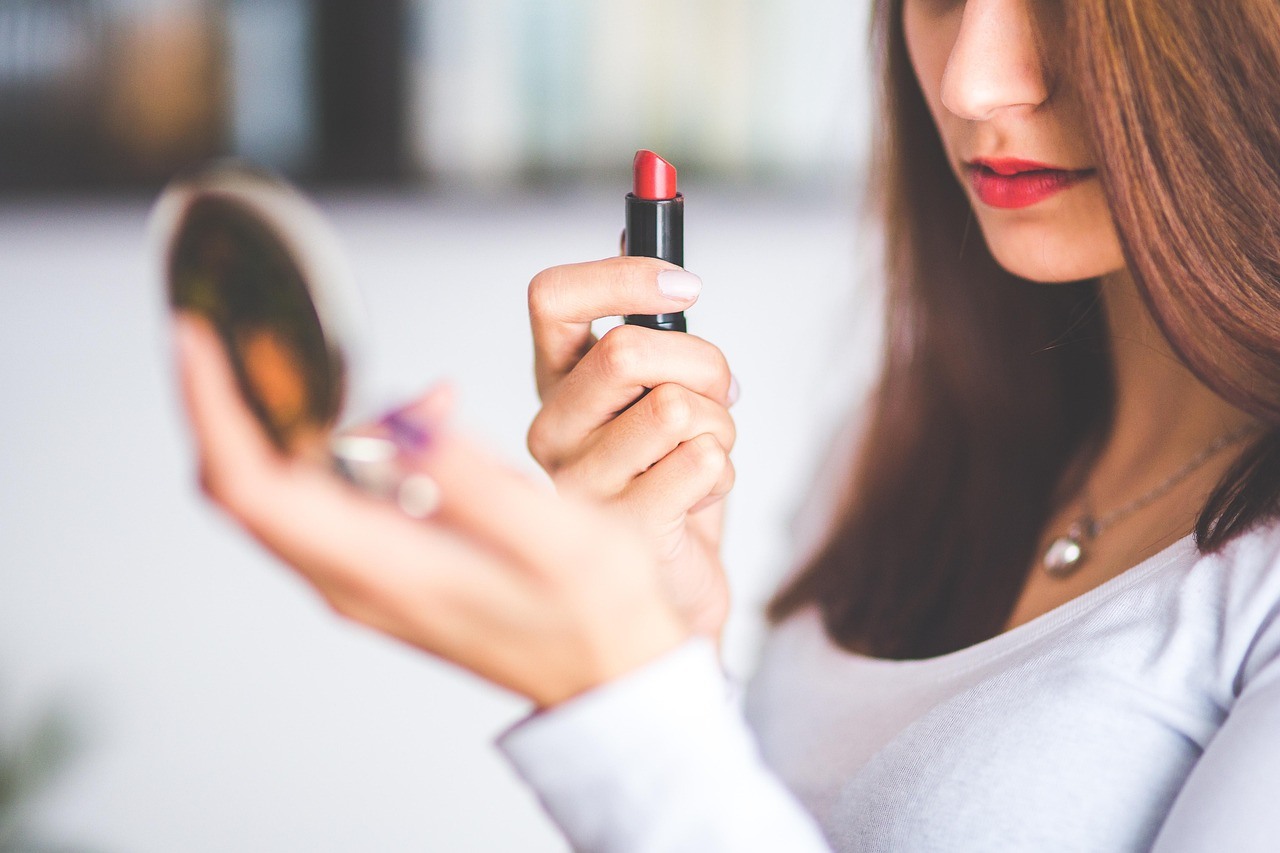
A woman holds red lipstick beside a round compact mirror, with her face and hands softly framed by bright indoor light.
The round compact sits near the foreground, catching only a softened portion of the scene while the woman’s face remains partly outside its frame. Her red lipstick supplies the strongest point of color, echoed by the color on her lips. Hands, mirror, and face form a loose triangle, concentrating attention on the quiet act of looking. The shallow focus dissolves the room into pale shapes and warm shadows, making the reflective object feel private and immediate. Unlike a large wall mirror, the compact offers a selective view that must be angled and held. Its small scale turns reflection into an intentional gesture rather than a passive background.
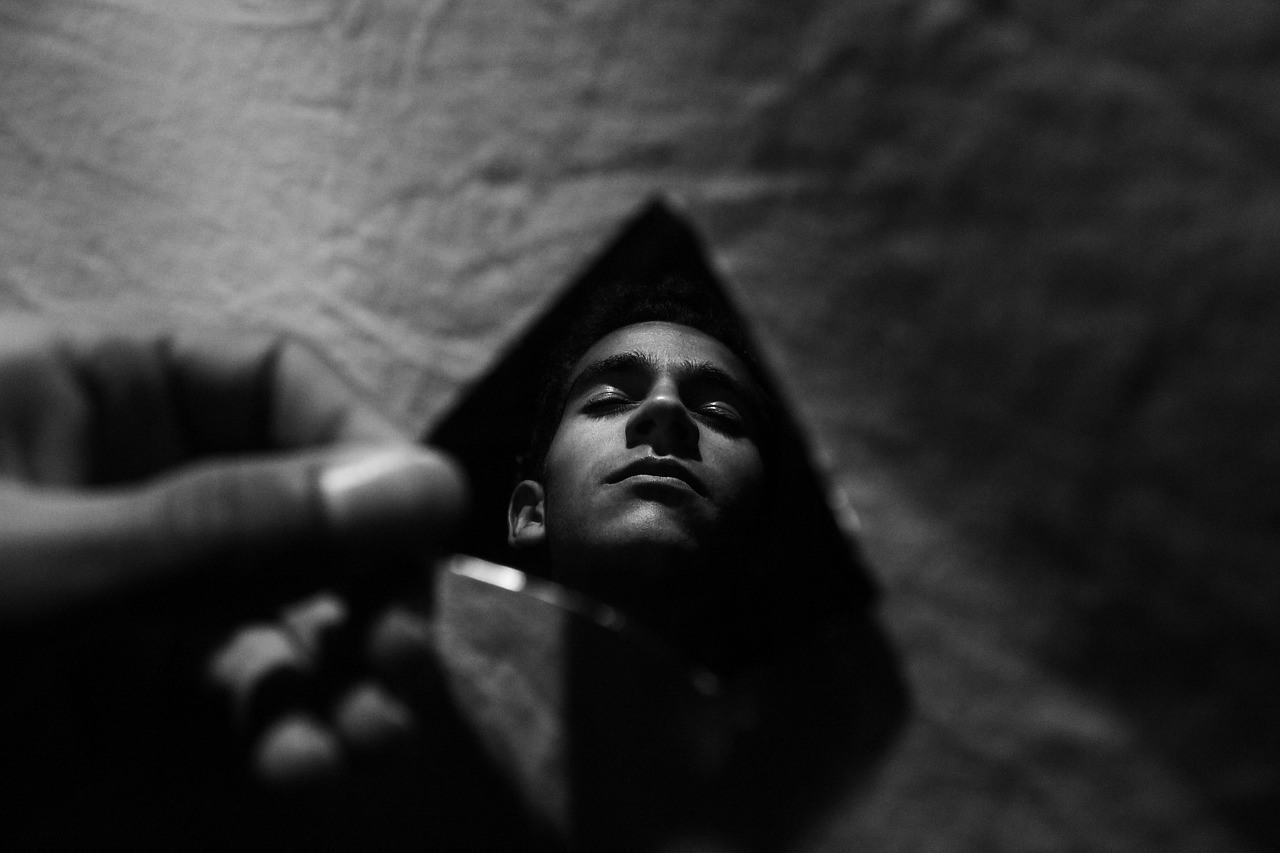
A dark triangular mirror reflects a man’s upturned face while a blurred hand reaches across the foreground.
A triangular mirror lies against a textured surface, enclosing the man’s face within three sharp edges. His upward angle and closed or shadowed eyes contrast with the blurred hand crossing the foreground. Black-and-white tones reduce the scene to skin, shadow, glass, and grain, while the mirror’s geometry imposes order on the softer human forms. The reflected face appears isolated from the body, almost suspended inside the dark shape. Focus falls unevenly across the image, making the hand feel close and uncertain while the face remains the quiet center. The result is a tense study of framing, separation, and inward attention.